January 1945
As the Army reshuffled men to meet the desperate demands of the European theater, Dad ends up in a major troop deployment sometime in January, crossing the Atlantic and drawing assignment to the Fourth Armored Division. "Gen. Patton's Finest."
1945
January
Chapter 2
Journey into the ETO
From his letter, May 23, 1945, after censorship rules had been relaxed.
"I sailed from New York harbor on the Queen Elizabeth."
"We zig-zagged our way across the Atlantic without convoy until one morning I came on deck right & early and there off on the horizon was a purple haze which I knew right away was land.
It didn't take long for the land to sort of sneak up and surround us on all sides for before I knew it I was gazing at the hills of Scotland."
It didn't take long for the land to sort of sneak up and surround us on all sides for before I knew it I was gazing at the hills of Scotland."
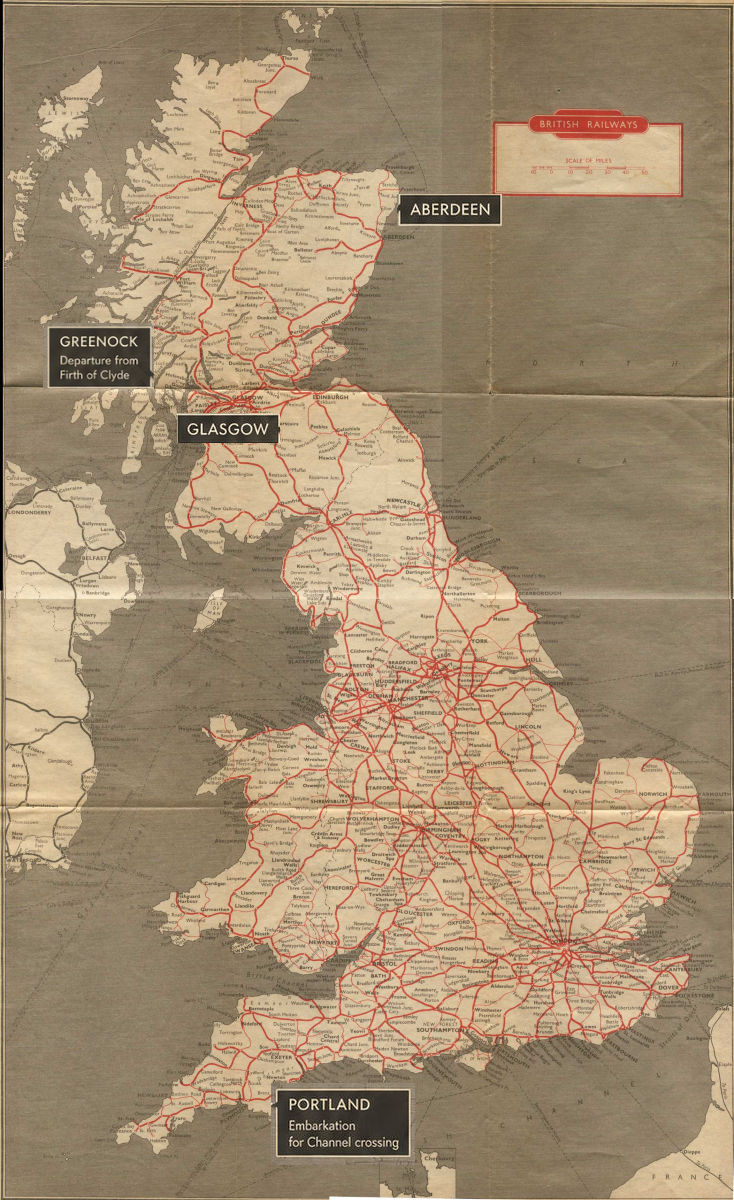


"We dropped anchor at a small town called Greenock. There we were loaded on trains and went thru Glasgow, then Aberdeen."
"Then down the east coast of the British Isles to Portland."
"We got off the trains and there, staring us in the face, was the wide open mouth of an LST (Landing Ship, Tank)."
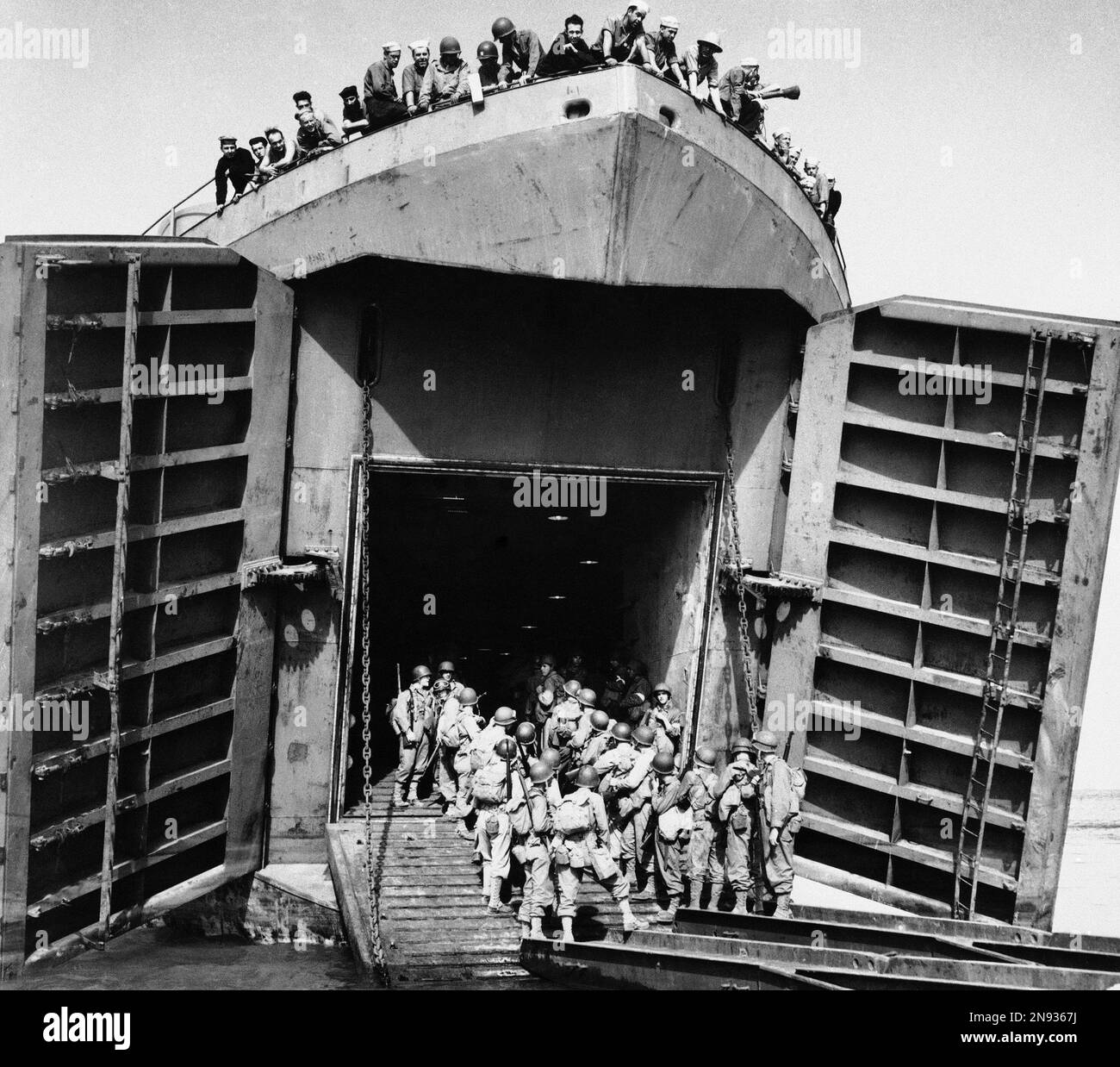
"We marched from the train on to the boat and that was the end of our stay in England."
"... under cover of darkness we made our dash across the channel. When the sun came up the next morning we could see the battle scarred city of Le Havre."
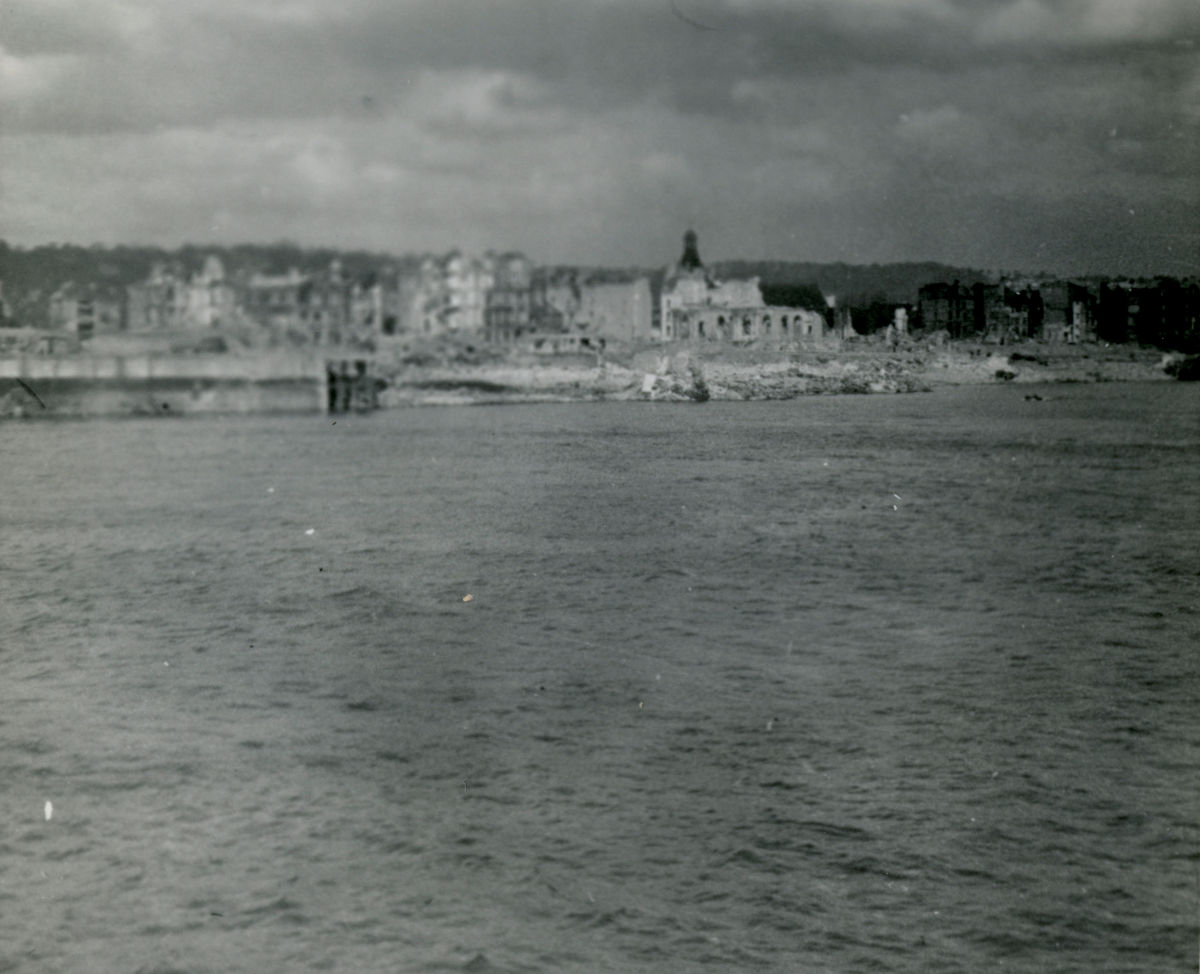
Destruction along Normandy coastline in Le Havre, France in 1944 (from the Collection of The National WWII Museum).
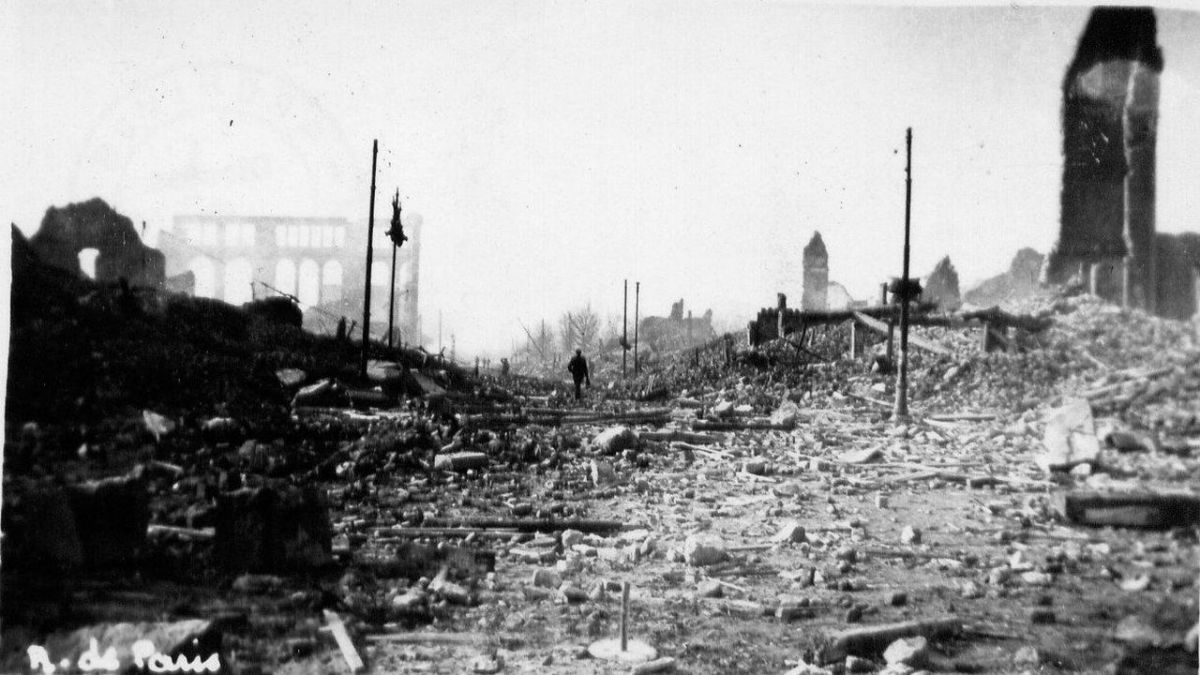
View of the Rue de Paris, center of Le Harvre, 1944 (© Bibliotheque municipale du Havre).
"We landed and after few hours rest were again loaded up on trains. They put 44 men in one of those little 40 + 8 boxcars which are about half the size of our freight cars back home.
To be comfortable was impossible. You couldn't sit down without sitting on somebody, and it was bitter cold. We rode that way for 5 days & nights."
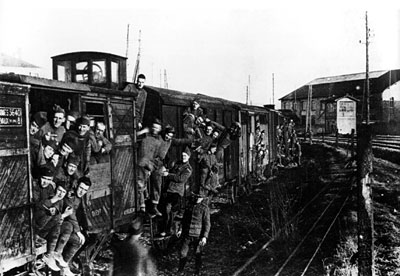
In World War I and World War II “Yanks” were transported to the front lines in these dual purpose railroad cars, known as 40 ET 8s. The wooden boxcars, built between 1872 and 1885, measured twenty feet long and nine feet wide. The cars could accommodate forty men or eight horses, creating memorable journeys for many soldiers. The boxcars also served to transport captured American soldiers to POW camps and Jewish citizens to concentration camps. (https://www.history.nd.gov/fgt/history7.html)
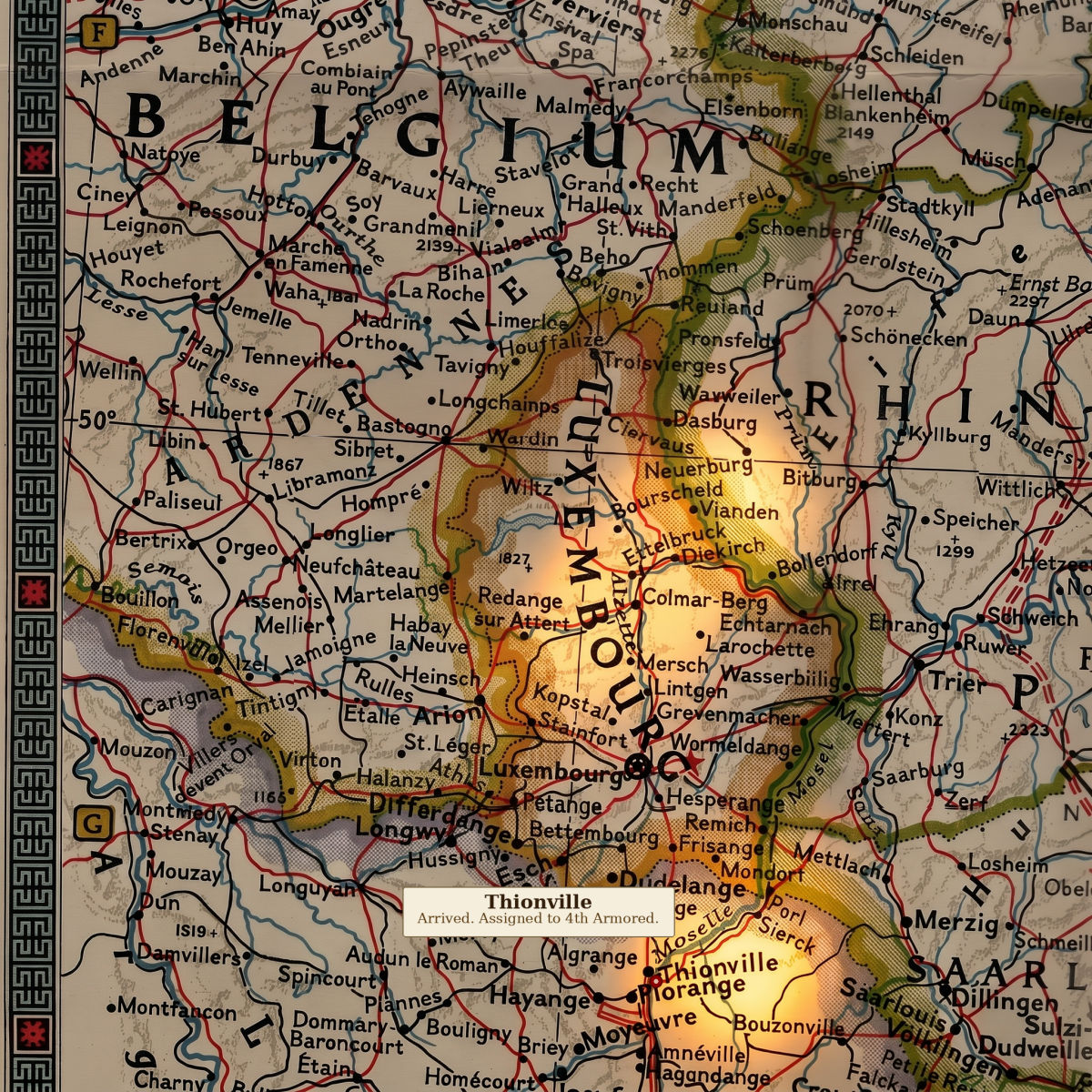
"We arrived at Thionville France, near the Luxembourg border. There, we were broken down and assigned to our different outfits."
"I drew the Fourth Armored Div.,
Gen. Patton's Finest."
Gen. Patton's Finest."
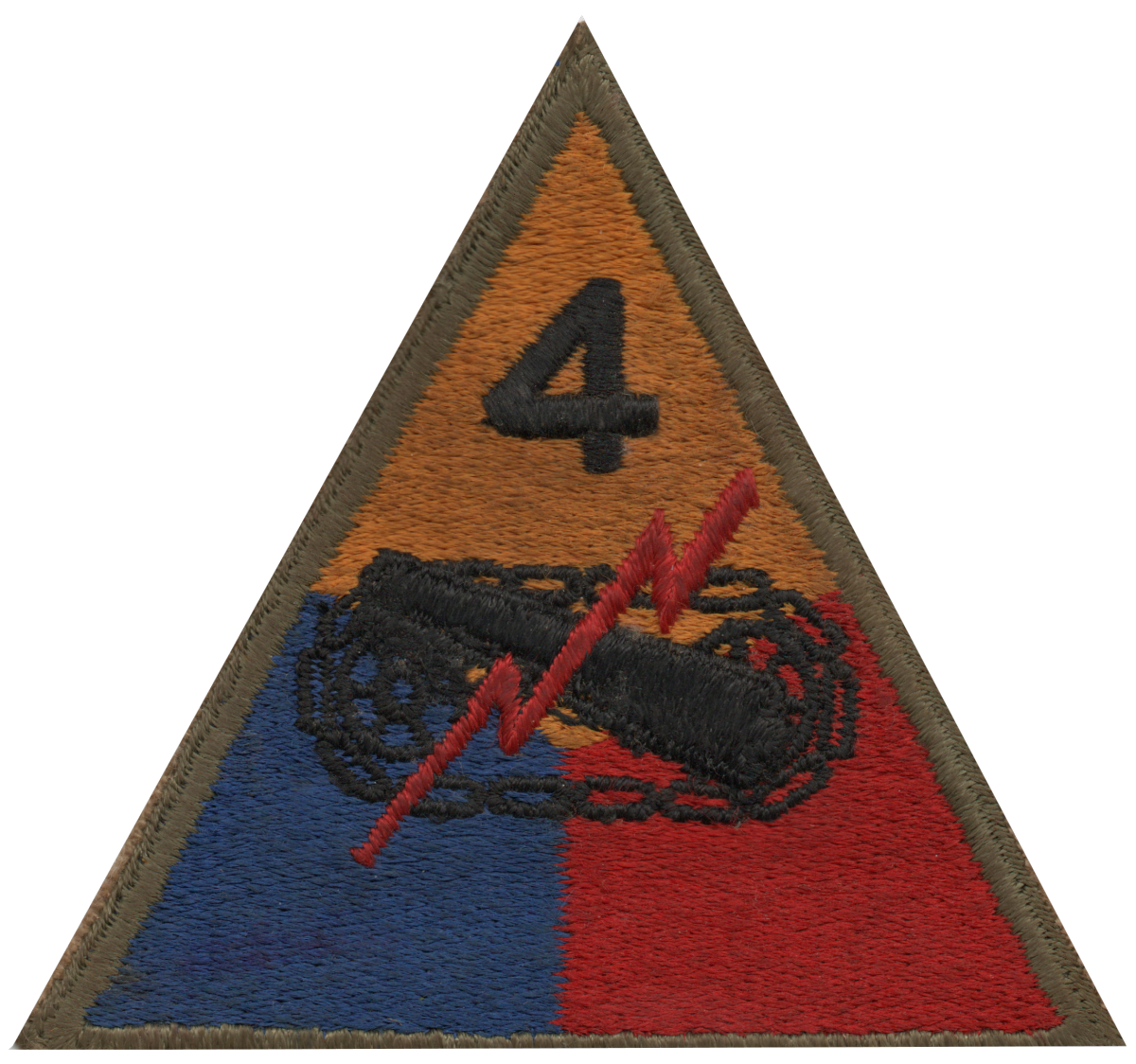
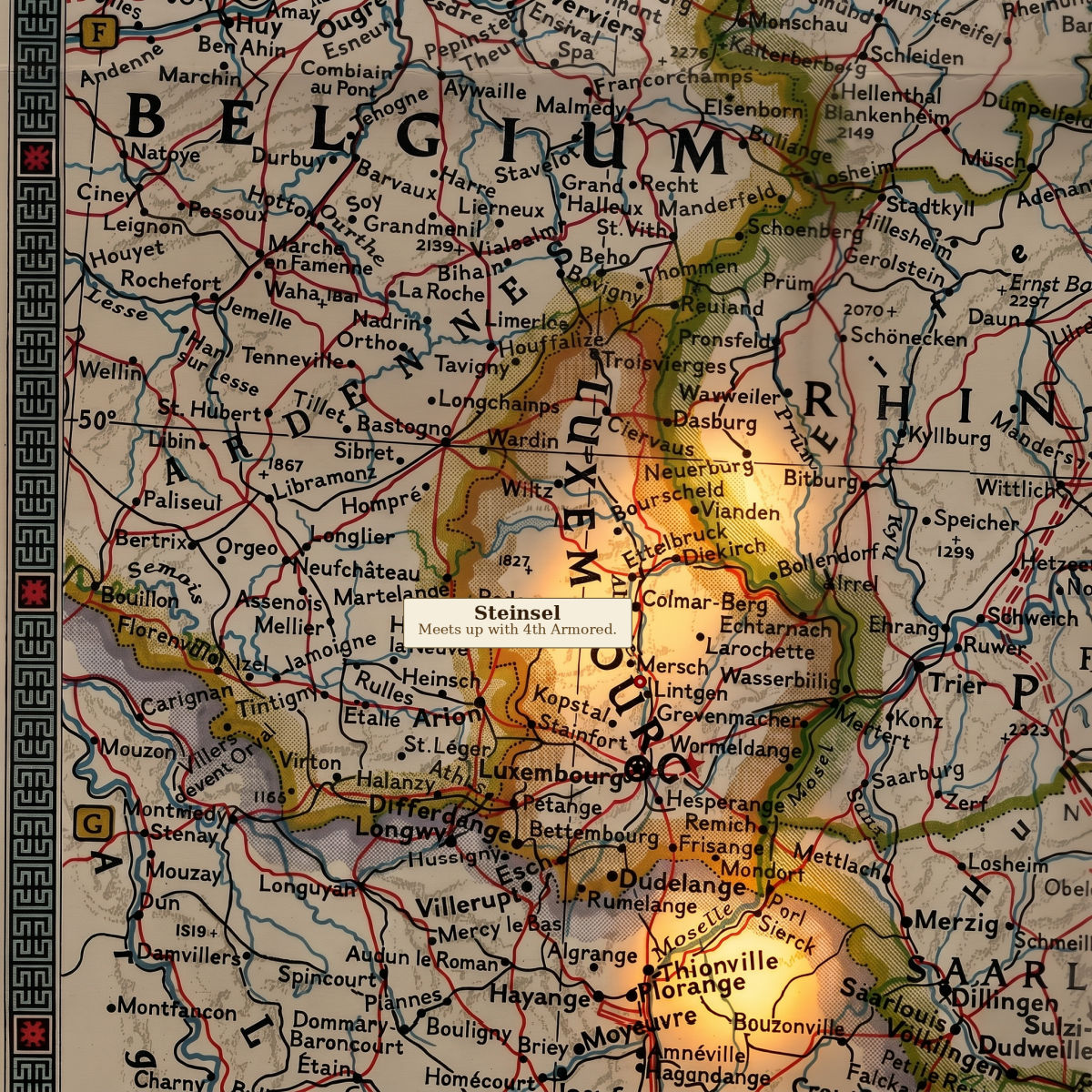
"I was driven to my outfit in a truck. The company was then enjoying a rest period at the town of Steinsel in Luxembourg."
"We stayed there a few days. I spent those days wandering around town, trying out my French."
"Am I glad I took as much French as I did in school. I was astounded to learn that the people here understand me, and I can actually understand them. I have become a sort of official interpreter for the gang. One old French man brought me to his house to get warm. He introduced me to his wife and daughter and I spent about three quarters of an hour answering questions about America. They were very good to me."
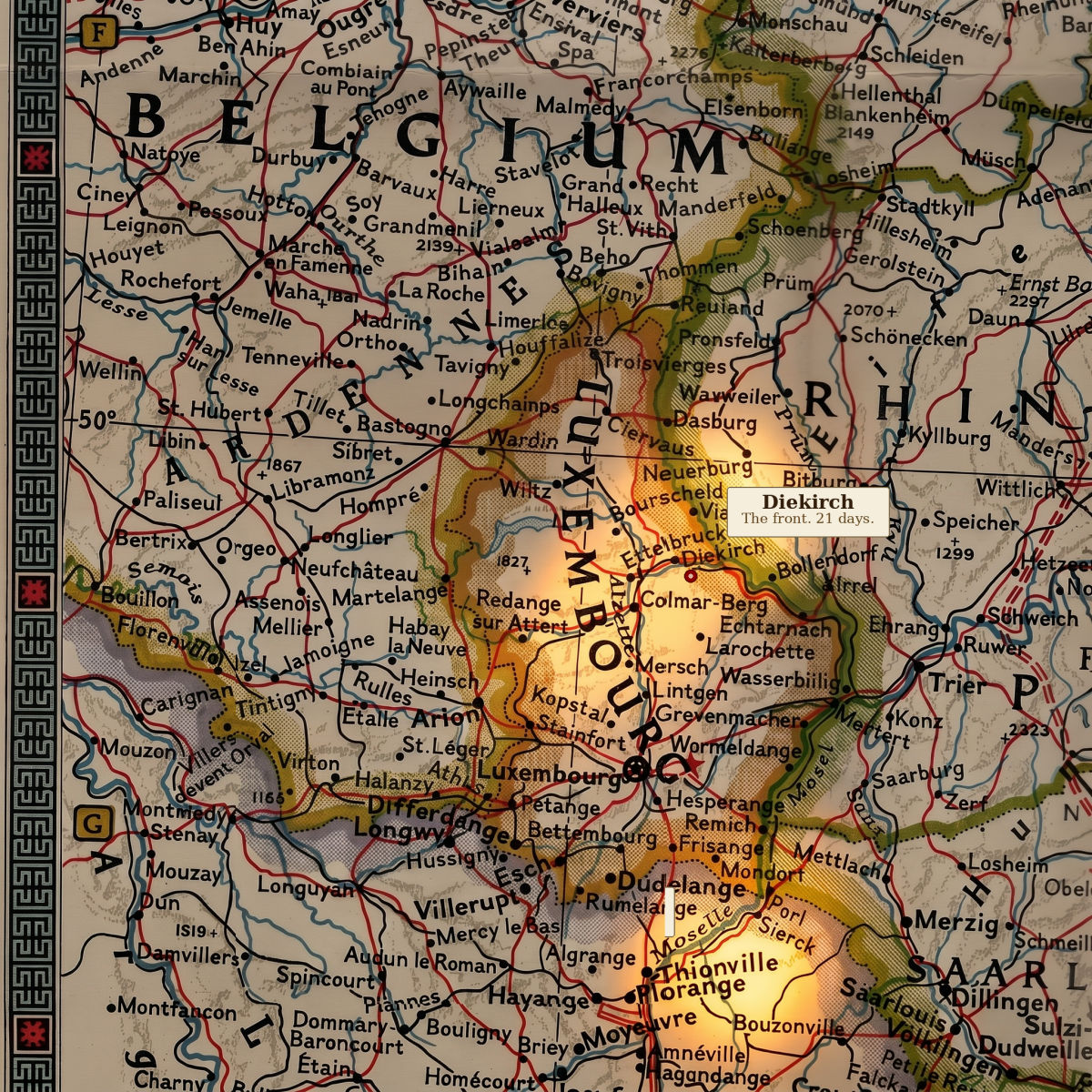
"We then went up on the front which was then along the Our River, the border of Luxembourg & Germany. We took up a defensive position near Diekirch and lived in our foxholes there for 21 days."