-
10-02-1945 Pictures, a Swiss Phone Call & a Hitler Youth
- Back
Document
Attachments
-
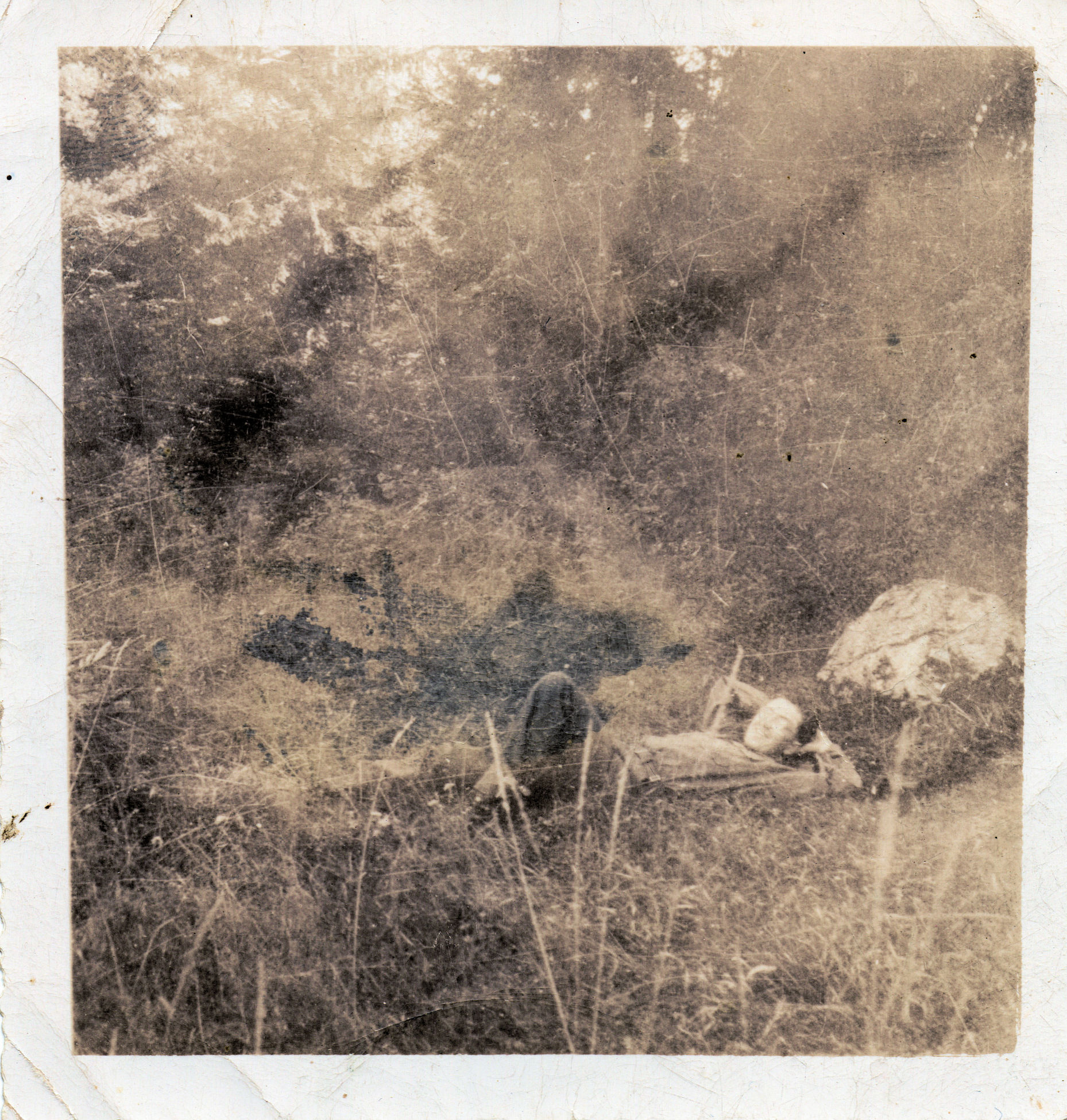
reclining
-
"Me and My Shadow" dad_shadow
-
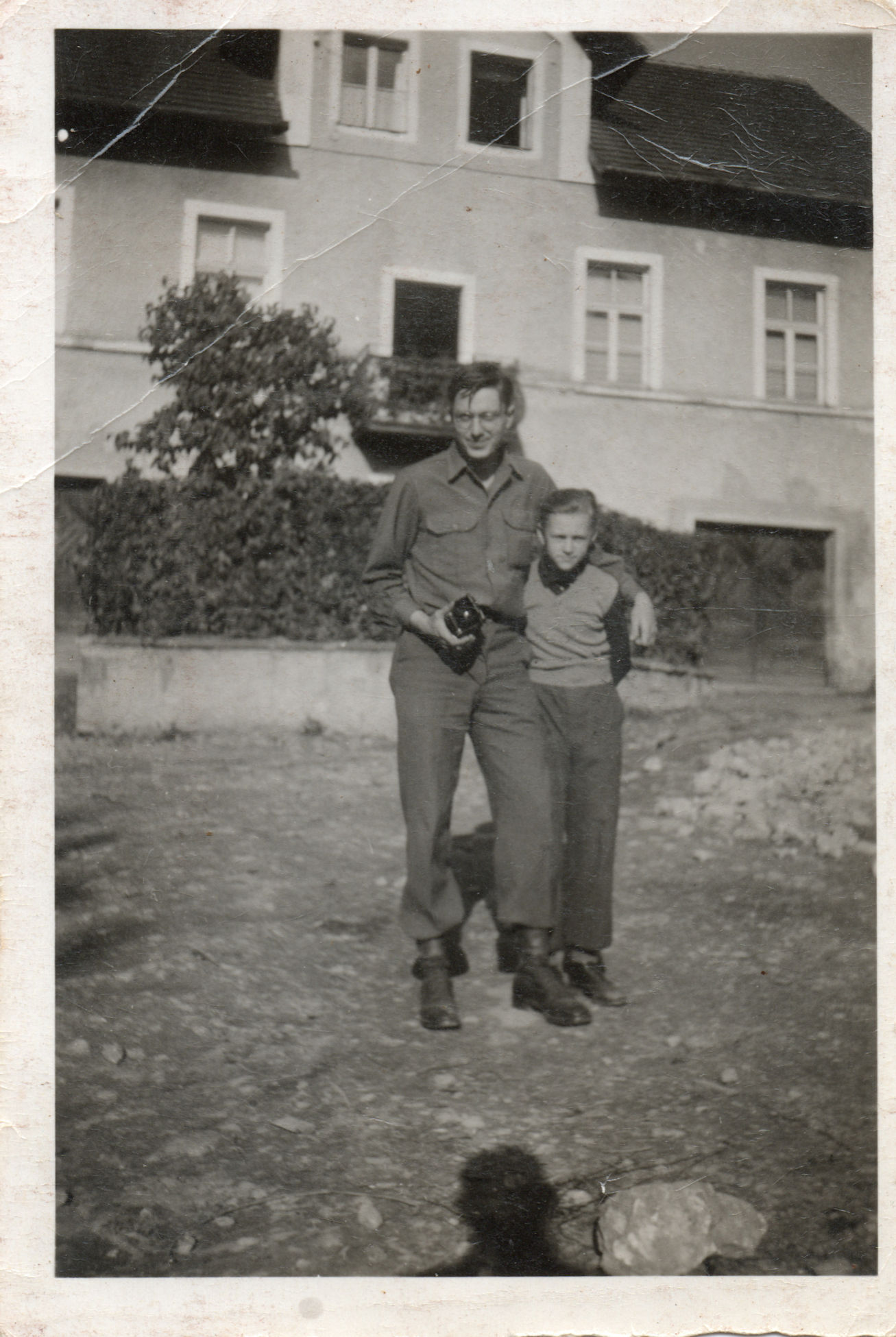
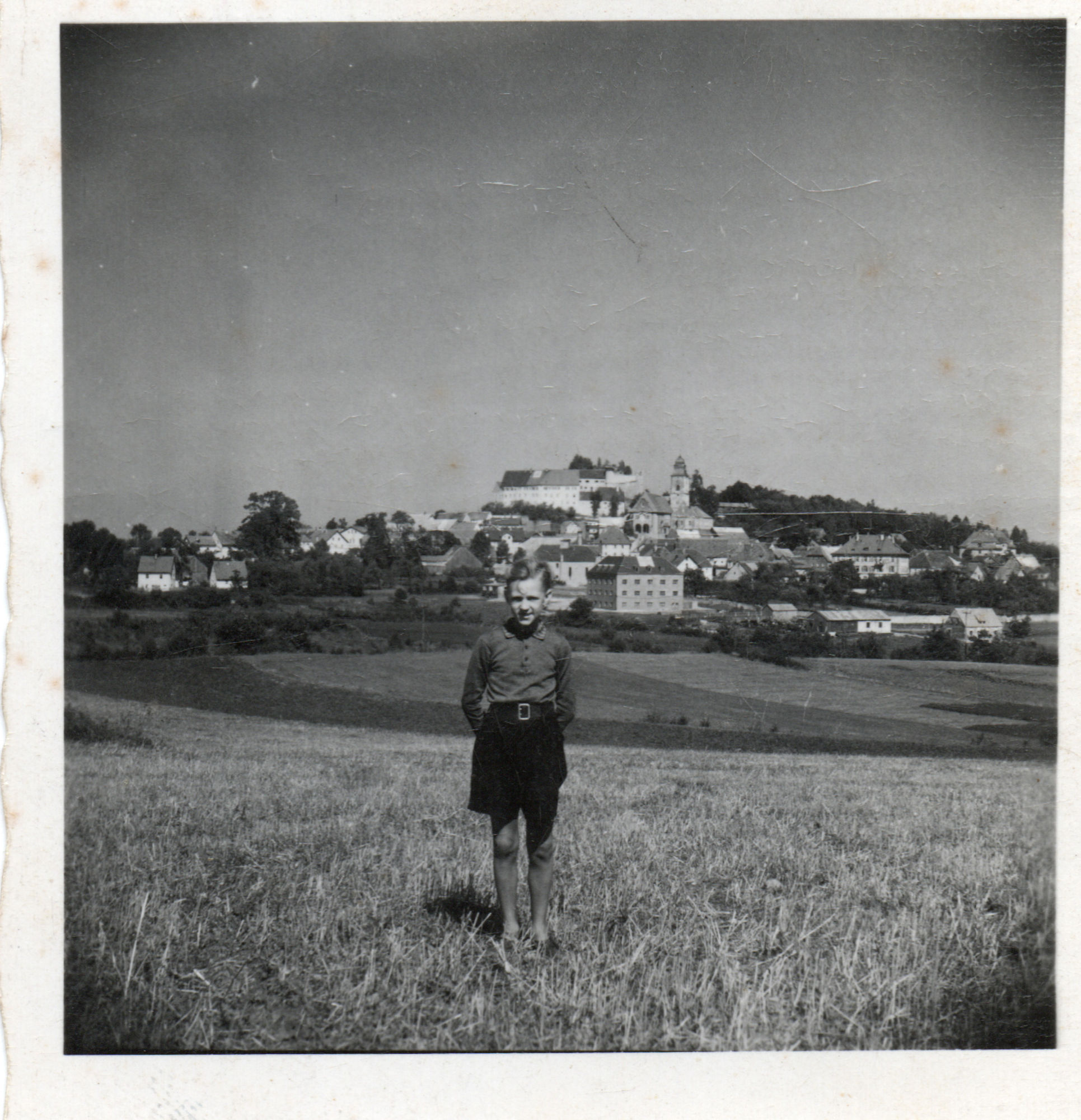
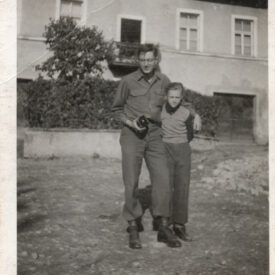
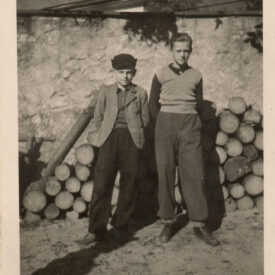
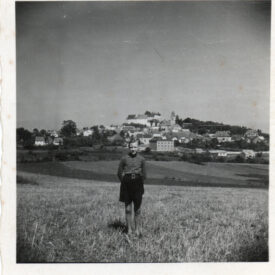
js Taken during a Sunday walk in the fields outside Parsberg, this photograph likely shows Josel Stanke, a local boy who had taken to following my father wherever he went. Josel had spent several years in the Nazi youth organizations before the war’s end. The hilltop buildings visible behind him include Burg Parsberg and the town church, landmarks that still dominate the skyline today.
-
js2
-
letter_09-18-1946 -
letter_12-14-1946 -
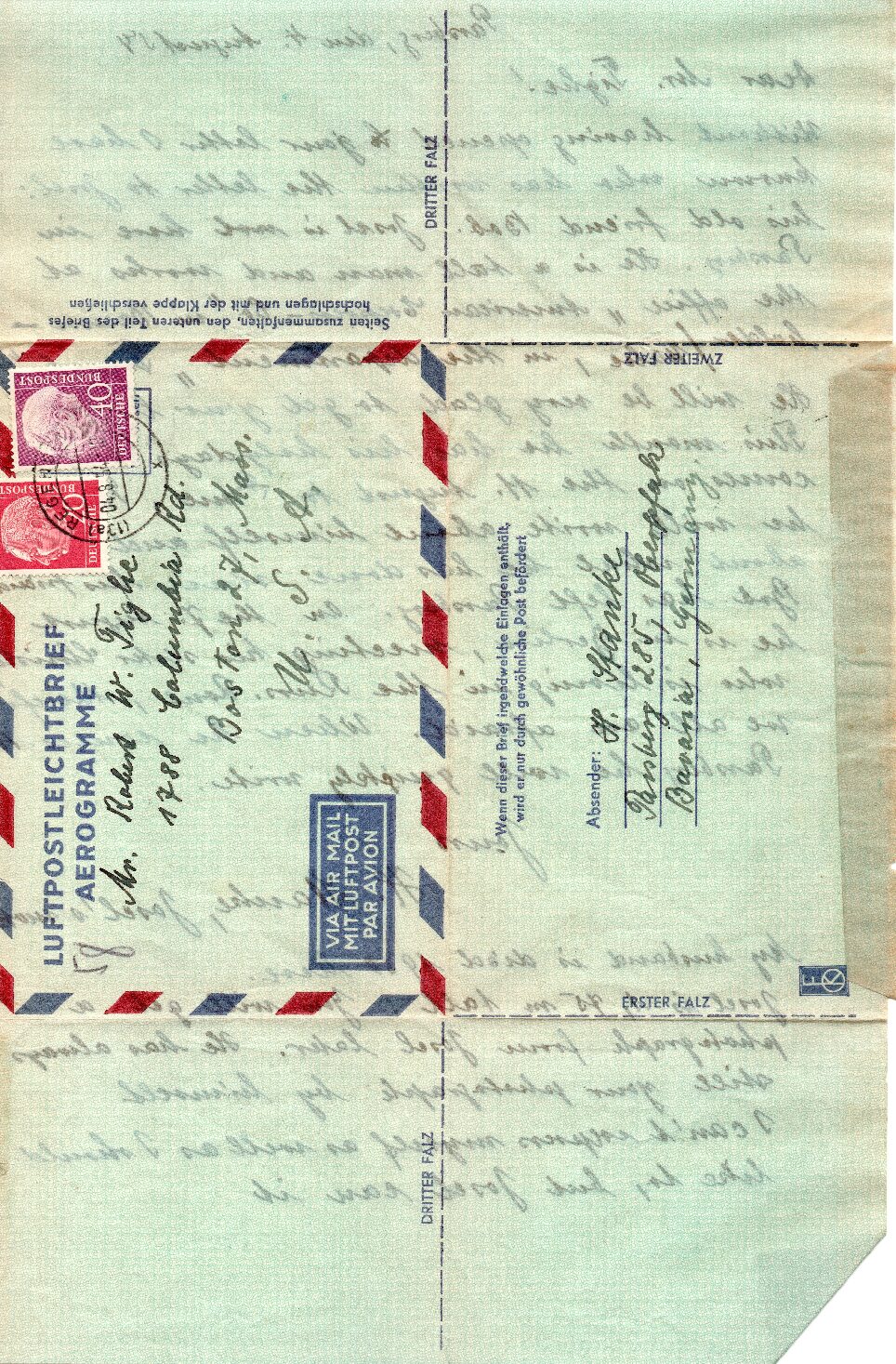
letter_08-04-1954 -
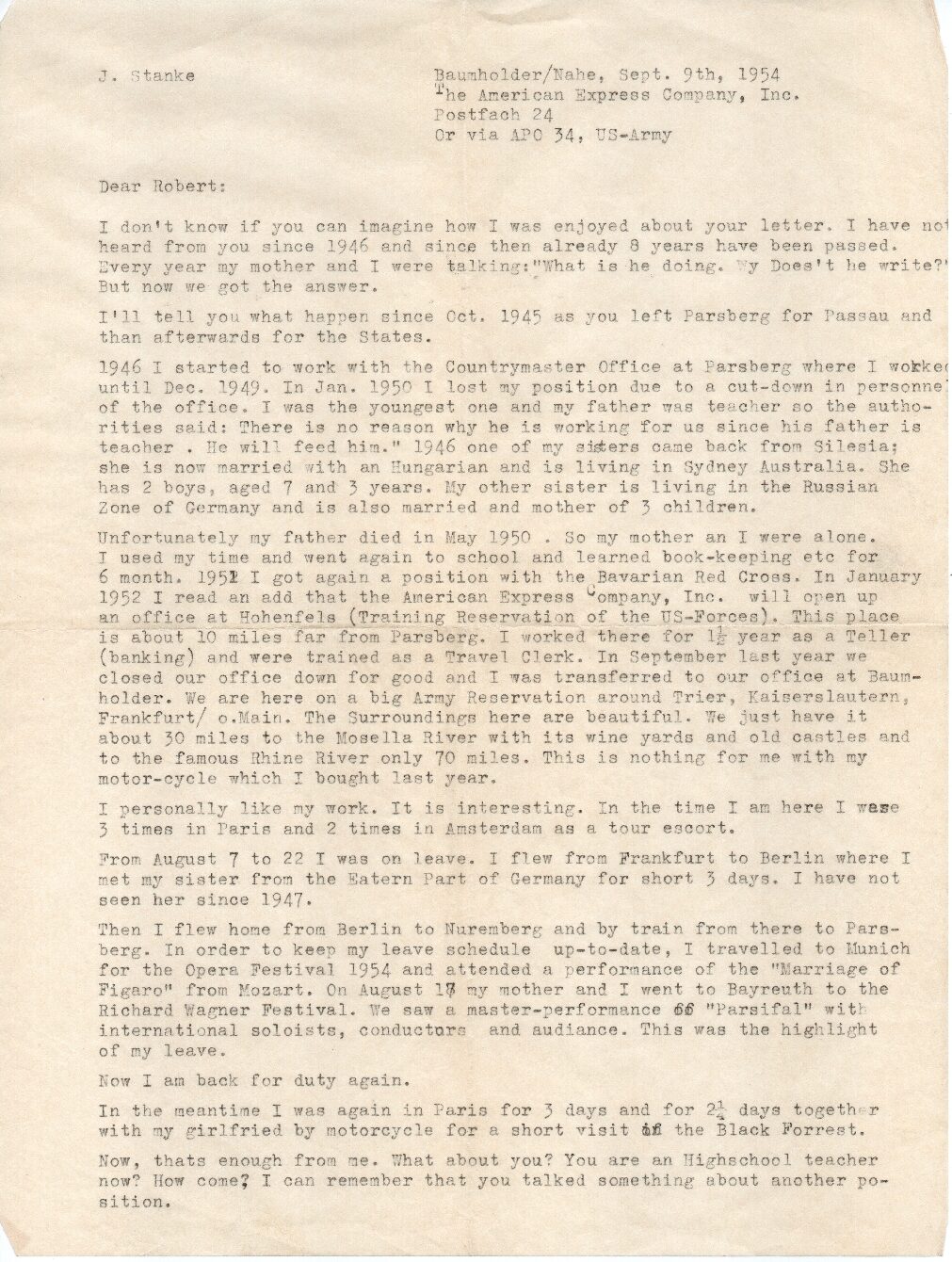
letter_09-09-1954
Metadata
Title
10-02-1945 Pictures, a Swiss Phone Call & a Hitler Youth
Date
October 2, 1945
Transcription
Parsberg, Germany
2 Oct 1945
Dear Mother Dad:
Enclosed you will find a few
more pictures. I had a couple more, however
I was obliged to give them away.
Since I had the negatives I didn't
mind. Have the negatives reprinted and
you will find a pretty good shot of
me reclining on the ground. By looking
at the negative, you would never
believe that the print would come
out. However, it printed very well
indeed.
One Sunday, a few weeks ago, I took
a walk in the fields outside of Parsberg.
For want of anything else to do, I took
a few pictures. I was accompanied by
a little german kid named Josel
Stanke, who has fallen in love with me
I guess. He follows me everywhere. Josel
is a confirmed disciple of Nazi-ism.
He spent 4 years in the Deutsche Jungvolk
and 2 years in the Hitler Jugend. He
firmly believes that Hitler was a
God-on-earth and twenty years from
now the Germans will be occupying
America instead of as in Germany as
it is now. I have tried everything I
know to Christianize him, all to no
avail. That will give you some idea
2
what we are up against here.
I have some more hope of this
telephoning from Switzerland. (If I ever
get there) It seems that the usual
procedure is this. As soon as I arrive
I send a cablegram telling you what
hotel and what city I shall be at
on a certain date. You then call long
distance operator and arrange for a
call to be made on that date to me.
It would not be practical for me to call
you for the trip is all pre-arranged
and I would not be in any one place
long enough to place the call, wait
for it to go through and then receive it.
One day I would be in Basel another in
Zurich, another Geneva, on another I
would be in Lucerne and so on. So, if
I do get there, please call me. Use
some of my funds. I understand that
it costs $14 for 3 minutes.
There is a rumor to the effect that
all men with 45 points or over will
be leaving this division on or about
Oct 14 for the 90th Inf Div and
eventual shipment home. This is only
a rumor. However, it is a fact that
we shall be leaving sometime during
the fall or early winter for some
3
other division that is going home. As
you know the 4th Armored is Army
of Occupation and will probably be
here for years. It has already been
announced that only men with
under 45 points will be in the Army
of Occupation. Oh yes, I now have 50.
Oh yes, Dad asked for the names
of some of the cities in which we
fought etc. Well I am sending a
large 2 piece map which shows the
route we took in our excursion
through Europe. The prison camps aren't
listed and I dont know the names
of them. We never stopped long enough
to find out. One of them however was
Ohrduff. Some of the cities
were Bitburg, Koblenz, Carden, Bad,
Kreuznach, Pfungstadt, Darmstadt, Hanau,
Lauterbach, Gotha, Gera, Jena and
Limbach.
Well, das all for now. So long.
Your Loving Son
"Oby"
Description
Describes sending additional photographs from Parsberg, recounts an encounter with a young German boy who had been a member of the Hitler youth, discusses hopes for a telephone call home during a possible furlough to Switzerland, and continues the counting of “points” that would determine when he might finally be shipped home.
The transatlantic phone call he describes would have been complicated to arrange and extremely expensive. Dad instructed his parents that if the opportunity arose they should place the call using funds from his account. The cost, he noted, would be $14 for three minutes — roughly $250 in today’s dollars.
Only one photograph from this group appears to have survived. It shows a young boy standing in the fields outside Parsberg, with the town visible in the distance behind him. The original caption written on the back of the photograph was later heavily obscured, the handwriting scratched over until it became unreadable.
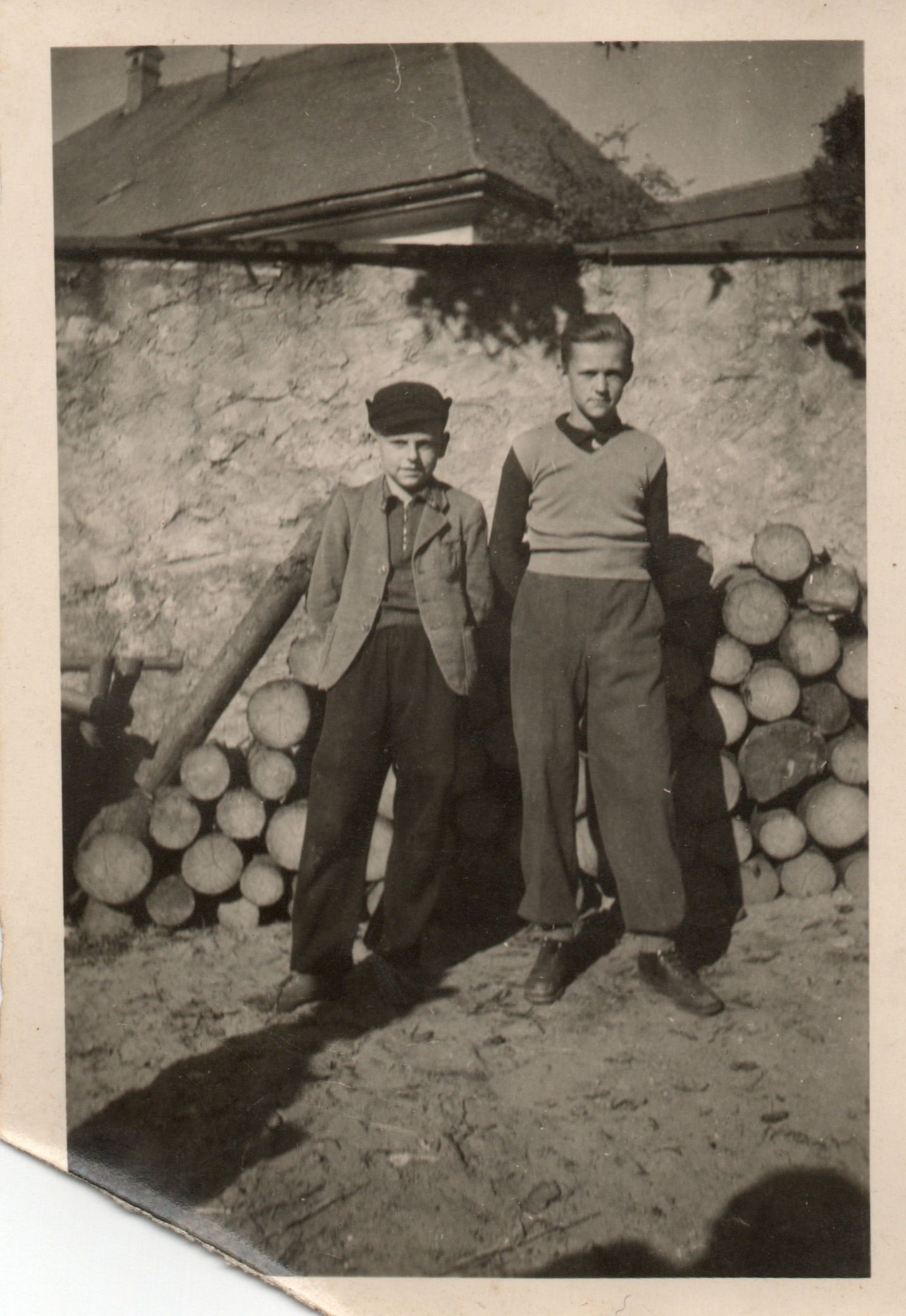
The photograph is almost certainly of the boy described in the letter: Josel Stanke, who had taken to following Dad wherever he went. Josel had spent four years in the Deutsches Jungvolk, the organization for younger boys, followed by two years in the Hitler Youth, the Nazi regime’s official youth movement. Dad described him as a “confirmed disciple of Nazi-ism,” firmly convinced that Hitler had been a god-like figure and predicting that “twenty years from now the Germans will be occupying America.”
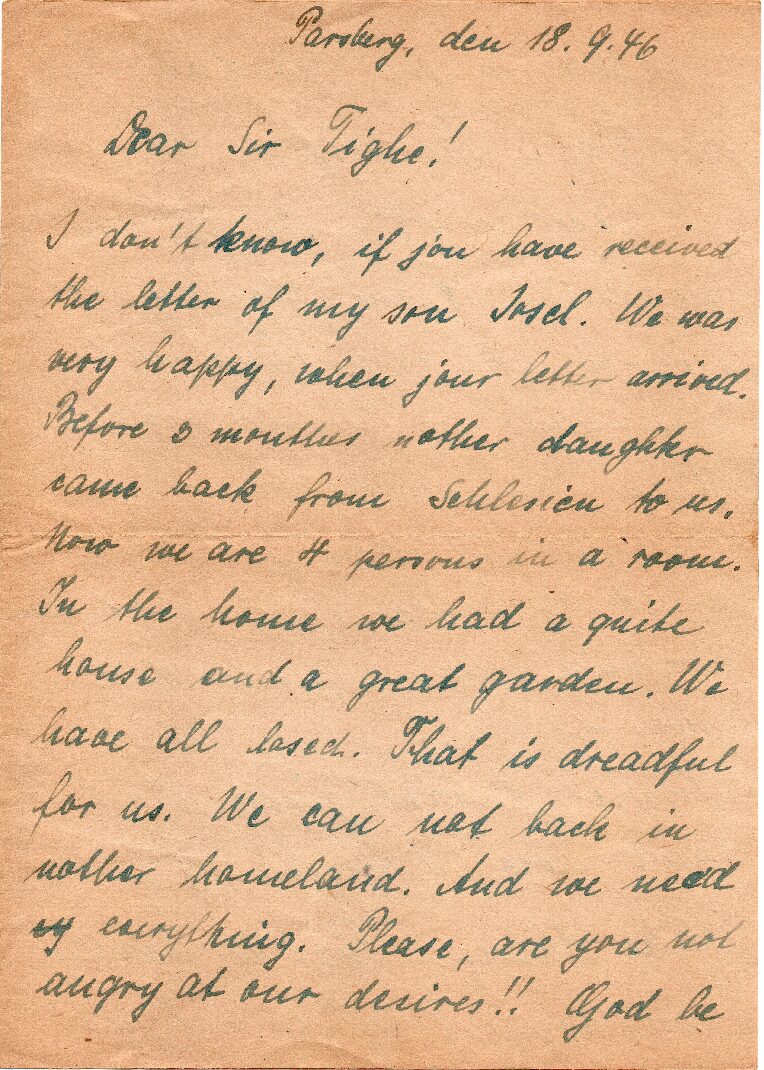
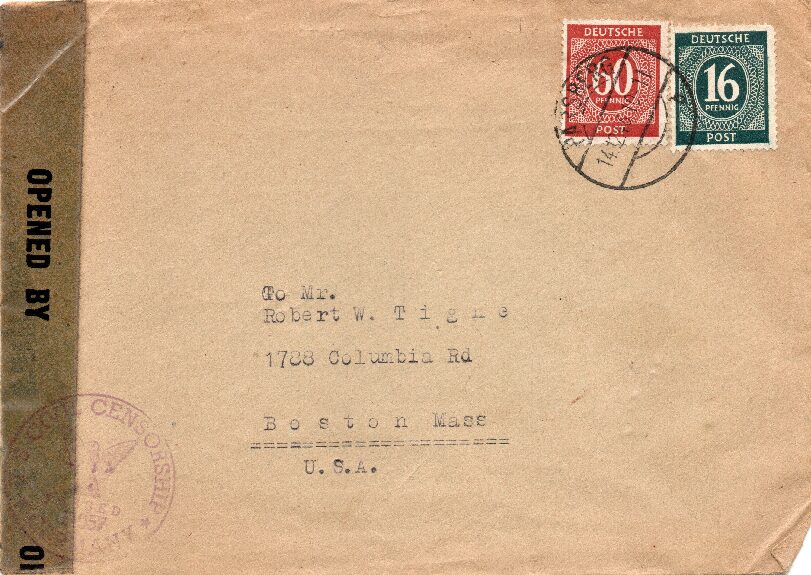
Despite this background, the two formed a friendly bond. After the war Dad remained in contact with Josel and his family. Letters from Josel’s mother describe the hardships faced by many German families in the immediate postwar years. In a letter written in 1946 she wrote that they had lost their house and garden and:
“Former I have given charities and now I must beg and take them.”
She wrote seeking shoes for Josel, and if Dad's mom might have some old dresses she could send.
Nearly a decade later Josel himself wrote again, describing his life since the war. One of his sister's had married and migrated to Australia. The other married and was living in the Russian zone of Germany. Josel himself was working for the American Express Company in Germany and traveling through Europe, showing how much had changed in such a relatively short time since the end of the war.
I also remember Dad telling the story of how he first met Josel. One of the responsibilities of the Army of Occupation was de-Nazification, collecting and destroying Nazi flags, propaganda, and other material. In one town he vividly remembered from the spearhead across Germany, the streets had once been filled with Nazi banners hanging from the tops of buildings and posters everywhere. Yet when American forces arrived post-war, not a trace of them remained.
Frustrated by his inability to speak German, Dad wanted to ask what had happened to all the propaganda. Eventually he encountered a young boy who spoke English, having learned it before the war. The boy proudly led him to a warehouse where all of the Nazi material had been stored. As the boy explained, “We’re just waiting for you to leave.”
Dad later recalled asking the boy whether he believed in God and Jesus Christ. The boy replied simply:
“There is no other god. There is only Hitler.”
In that moment Dad realized that the boy’s certainty about Hitler had been formed in much the same way his own religious beliefs had been formed — through upbringing, teaching, and trust in authority. Each of them believed what they had been raised to believe.
The encounter raised a question that would stay with him for years afterward: how do we know that what we believe is true?
In the years after the war Dad immersed himself in the study of philosophy, history, literature, languages, and religion, at one point even considering entering the priesthood. Over time he came to see religious belief as belonging to a different category from other forms of knowledge — grounded not in proof or evidence, but in faith.